



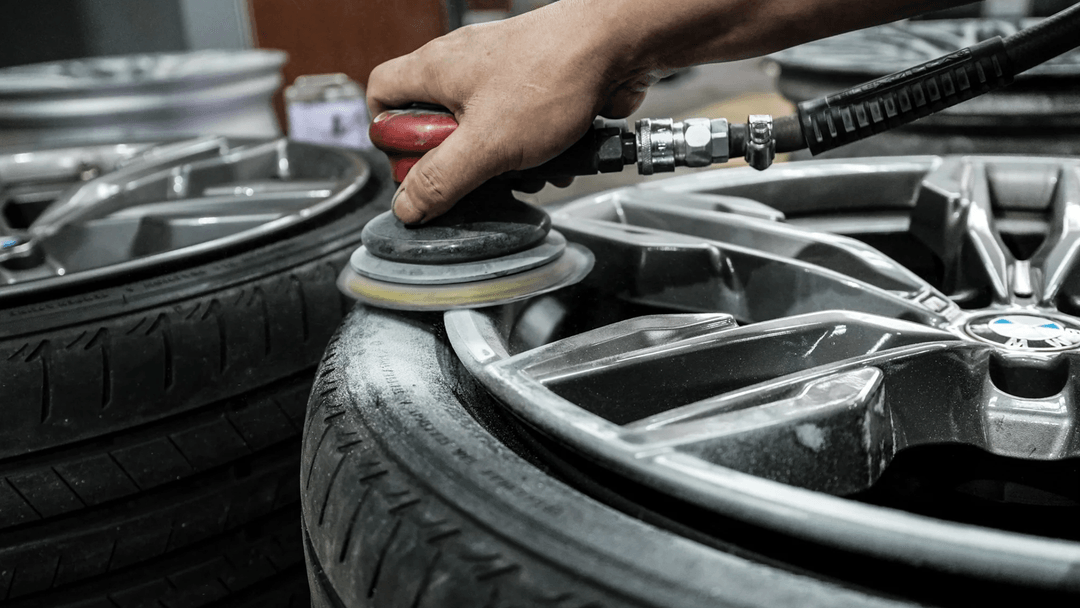
A flat tyre has impeccable timing. I’ve had my fair share of trauma from many a flat over the years, but I’ll spare you the diatribe. So: here's the guide I wish I'd had so long ago. Everything below covers how to change a car tyre safely, what should be in your boot, and, just as importantly, when you shouldn't attempt the swap at all.
First: are you on an expressway?
Before anything else: if your tyre goes flat on the PIE, CTE, or any expressway, don't change it yourself. Ever.
Steer gently onto the road shoulder, switch on your hazard lights, and call LTA at 1800-2255-582 (1800-CALL-LTA). The EMAS recovery team will tow your car to the nearest designated carpark outside the expressway, free of charge, and they're on call 24 hours a day. While you wait, stand behind the guardrail if you can, downstream of your car and away from oncoming traffic. If it's unsafe to get out, stay inside with your seatbelt on and wait for help.
LTA's own guidance says not to repair your vehicle on the expressway. Traffic passes the shoulder at full speed, centimetres away, and no spare tyre is worth standing in its path. EMAS tows you to the nearest carpark rather than to a workshop, so from there the onward tow or repair is yours to arrange.
How to change a car tyre in 8 steps
Tap through the interactive guide below, then read on for the full details. The whole job takes around 30 minutes once you know the sequence.
1. Pull over safely
The moment the car starts pulling to one side or the steering goes heavy, ease off the accelerator and put your hazards on. Resist the urge to brake hard. Look for flat, firm, level ground away from traffic. Avoid grass and slopes, because your jack can sink or slip. Once stopped, pull up the parking brake, shift into Park or first gear, and get everyone out of the car and away from the road.
2. Gather your kit
Spare, jack, wheel wrench, locking wheel nut adapter if you have one. Wedge something solid, like a brick or a chock, against the wheel diagonally opposite the flat so the car can't roll.
3. Loosen the nuts first
This is the step most first-timers get wrong. While all four wheels are still on the ground, turn each wheel nut about half a turn anticlockwise. They'll be stubborn, so lean on the wrench with your body weight if you need to. Don't remove them yet. The reason for the order is simple physics: on the ground, the wheel can't move. In the air, it just spins with your wrench.
4. Jack it up
Find the jacking point nearest the flat. It's a reinforced notch or marked pad on the sill, usually just behind a front wheel or ahead of a rear one, and your owner's manual shows exactly where. Wind the jack up until the flat tyre is clear of the ground with a little room to spare, since the inflated spare is fatter than the flat. And never, at any point, put any part of yourself under a car held up only by a jack.
5. Swap the wheel
Remove the nuts fully and put them somewhere they can't roll away. Your upturned hubcap works. Pull the flat straight off, slide it under the sill as a safety cushion, lift the spare onto the bolts, and spin each nut on by hand until snug.
6. Lower and tighten
Wind the car back down until the tyre takes the weight, then tighten each nut firmly with the wrench in a star pattern, jumping across the circle rather than going around it. That seats the wheel evenly. Going around in a circle can leave it sitting crooked.
7. Pack up and check
Stow the flat, the jack, and the tools. Then, at the next petrol station, check the spare's pressure. Spares lose air quietly over the years while nobody's looking, and space-savers typically run much higher pressures than regular tyres, so check your manual for the right figure.
8. Drive gently
On a space-saver, stay under 80km/h and treat it as a get-you-home tyre, not a new normal. Even on a full-size spare, get the flat sorted soon. Until you do, you're one puncture away from being stranded.
When to call for help instead
Some flats aren't a DIY job, and knowing when to put the wrench down matters as much as knowing how to use it. Call for assistance when:
- You're on an expressway or anywhere traffic passes close (call 1800-CALL-LTA)
- There's no usable spare, or you only have a repair kit and the damage is too big for it
- The wheel or rim itself is damaged
- It's pouring, it's late at night on a quiet road, or you have young kids in the car
- You're just not confident, which is a perfectly valid reason
For everything off the expressway, you have options. AA Singapore members can call the 24-hour hotline at 6748 9911, and a flat tyre change is covered as long as your car carries its own spare. Many motor insurance policies bundle 24/7 breakdown assistance too, and it's worth checking yours now rather than by torchlight on a road shoulder. Singapore also has no shortage of 24-hour mobile tyre services that will drive to you and patch or replace on the spot, with onsite patches typically running around $30 to $60 as of mid-2026.
Repair or replace?
Once you're mobile again, the flat needs a verdict. A small puncture in the tread, under about 6mm, can usually be patched for around $10 to $20 at a neighbourhood tyre shop. A sidewall puncture, a large or jagged hole, or a tyre that's already been patched twice means replacement, which typically runs from about $80 for smaller cars to $250 and beyond for larger wheels, depending on brand and size.
While you're at the shop, have them check your tread as driving below 1.6mm is an offence in Singapore. Worn tyres also brake dramatically worse in the rain, which matters rather a lot in a country where the sky opens on a schedule of its own.
Quick answers
How long can I drive on a spare tyre? On a space-saver, keep under 80km/h and only drive as far as needed to get the flat repaired. A full-size spare can be driven normally, but sort the flat out promptly anyway.
Can I drive on a flat tyre? Only run-flats are designed for it, typically up to around 80km at 80km/h. Driving on a normal flat tyre destroys the tyre and can damage the wheel and suspension.
My car has no spare. What now? Check for a sealant repair kit under the boot floor. If the puncture is small and in the tread, the kit gets you to a workshop. If not, call a mobile tyre service or your roadside assistance provider.
See you on the road,
Amanda 💙
(Feature photo from: Pitstop Tyres)
Related articles
- The best places to get your car detailing done: keep your car looking showroom-ready
- The best babysitter services in Singapore (2026)
- The best coworking spaces in Singapore worth leaving your bed for
- Your guide to upcoming BTO projects in Singapore (2026)
- The cheapest car washes in Singapore, sorted by area


