



.png)
The first time you sit down to shortlist a preschool in Singapore, it can feel like homework you never signed up for. There are hundreds of centres, an alphabet soup of acronyms, and everyone from your colleague to your neighbour to a stranger in a parenting group has a strong opinion about where your child should spend their days.
It's a big decision, but it's a manageable one once you know how the pieces fit together. This guide walks you through the whole thing: the different types of preschool, how the system is set up, what you'll actually pay, and a spread of well-regarded centres across every budget. By the end, you'll (hopefully) know what to look for and which questions to ask.
Childcare, kindergarten, and everything in between
"Preschool" is really an umbrella term. In Singapore, it covers two main things: childcare centres and kindergartens, both regulated by the Early Childhood Development Agency (ECDA).
Childcare centres do the heavy lifting for working parents. They run long days, usually around 7am to 7pm, stay open through most of the year, and often take children all the way from infancy to just before Primary 1. Many house infant care, playgroup, nursery, and kindergarten classes under one roof.
Kindergartens are more education-focused and tend to run half-day sessions of three to four hours. They follow school terms, which means holiday gaps you'll need to plan around if both parents work.
Your child's level usually tracks the year they turn a certain age. Infant care covers roughly 2 to 18 months, Playgroup is around 18 months to under 3, then come Nursery 1 and 2 at about 3 and 4, followed by Kindergarten 1 and 2 at about 5 and 6.
How the system works: ECDA, operators, and SPARK
Every licensed preschool answers to ECDA, which sets the baseline for safety, staffing, hygiene, and space. Your best starting point is the official Preschool Search tool on LifeSG. Pop in your postal code, filter by full-day or half-day and by fee range, and you'll see nearby centres along with a rough vacancy indicator.
You'll also notice that centres fall into different operator types. Anchor Operators receive the most government funding and, in return, keep their fees the lowest and commit to quality standards. There are five preschools managed by them: PCF Sparkletots, NTUC My First Skool, M.Y World, Skool4Kidz, and E-Bridge. Partner Operators are a larger group of centres that also agree to fee caps in exchange for funding. Then there are private and international preschools, which set their own fees and sit at the premium end.
While you’re on your hunt, you should also watch out for preschools recognised by SPARK. Over 800 SPARK-certified centres have met ECDA's quality standards, and a smaller number earn the higher Commendation tier.
What you'll actually pay
Fees vary widely by tier, and figures below are monthly, before subsidies.
At the affordable end, Anchor Operators cap full-day childcare at $610 and infant care at $1,235 for Singapore Citizen children. After the Basic Subsidy, working parents can often bring full-day childcare down to roughly $300 a month. MOE Kindergartens are another wallet-friendly option at $160 a month, though they run half-day and you'd add on care separately.
In the middle sit Partner Operators, with full-day childcare capped at $650 and infant care at $1,290. Local premium chains climb from there, often landing somewhere around $1,400 to $2,500. International preschools sit at the top, frequently $2,500 to $4,000 or more, with some international-school early-years programmes billing tens of thousands a year.
If you need help, the Basic Subsidy is open to all Singapore Citizen children in licensed centres, with working mothers getting more. On top of that, a means-tested Additional Subsidy helps households below a certain income line, with lower-income families receiving the most. And from January 2027, the income ceiling for the Additional Subsidy rises from $12,000 to $15,000 a month, which the Government expects will help more than 60,000 additional families.
Picking a curriculum
Walk into ten centres, and you'll hear ten philosophies. Most Singapore preschools actually blend a few approaches, so don't get too hung up on the label.
- Play-based learning uses guided play to build language, social, and thinking skills. It's the backbone of MOE's own framework, and quality play-based programmes support academic readiness later, even if they look less "schooly" in the day-to-day.
- Montessori is child-led, with special hands-on materials, mixed-age classes, and long stretches of independent work. It builds focus and independence. However, the Montessori method isn’t regulated, so how faithfully it's done varies from centre to centre.
- Reggio Emilia is project-based and driven by your child's own interests, with a big emphasis on creativity and the classroom environment itself. It's an inspiration rather than a fixed method, so expect variation.
- Bilingual immersion weaves English and a mother tongue, usually Mandarin, through the whole day, tapping into the early window when languages come easily.
- Academic-focused programmes lean into structured literacy and numeracy for Primary 1 readiness.
When to start looking
…Sooner than you think. Popular centres fill up fast, and infant care or Nursery 1 slots in high-demand estates can have waitlists running one to two years deep.
Six to twelve months before your intended start, research, tour, and compare your shortlist. Three to six months out, submit your forms and pay the registration fee, which is usually somewhere between $50 and $200 and often non-refundable. MOE Kindergarten registration runs on a fixed annual window about a year ahead, with priority given to siblings and families living within one kilometre. Private and international centres are more flexible, and often take applications year-round.
What to ask when you visit
A visit tells you more than any listing ever will. Go in with a short list of questions and, just as importantly, get a feel of the vibe.
- What's the actual teacher-to-child ratio? ECDA minimums require a 1:5 teacher-child ratio in infant care and a 1:25 ratio in kindergarten, but smaller groups often mean more attention.
- Are the teachers trained and experienced, and how long do they typically stay? High turnover is worth probing.
- How do you handle safety, sick children, medication, and drop-off security?
- What do meals look like, and how are allergies managed?
- What's the full fee schedule, including GST, deposit, holiday charges, and the withdrawal notice period?
Of course, some things can’t be measured on a stat sheet. Are children busy and comfortable? Do teachers get down to eye level? Is it clean without feeling clinical? That warmth is hard to fake and hard to measure, but you'll know it when you see it.
Notable preschools worth knowing, by budget
Most affordable: anchor operators and MOE Kindergartens
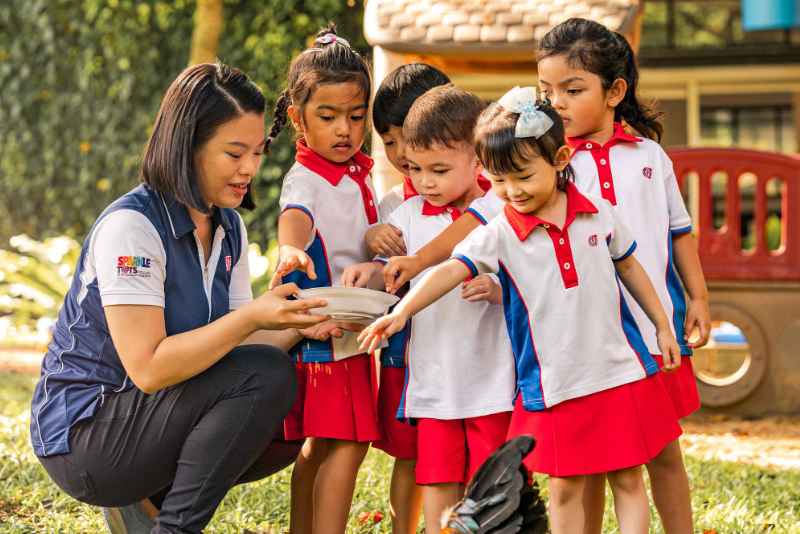
PCF Sparkletots is the largest network in the country, with a few hundred centres spanning infant care to K2, which makes it one of the easiest to find near home. NTUC My First Skool is another big name, running a play and inquiry-based curriculum across well over a hundred centres, many of them SPARK-certified. E-Bridge, part of the EtonHouse group, brings a Reggio-inspired, inquiry-based approach at anchor-operator prices. And MOE Kindergartens are worth a look for their affordability and their priority link to a nearby primary school at registration time.
Mid-range: partner operators
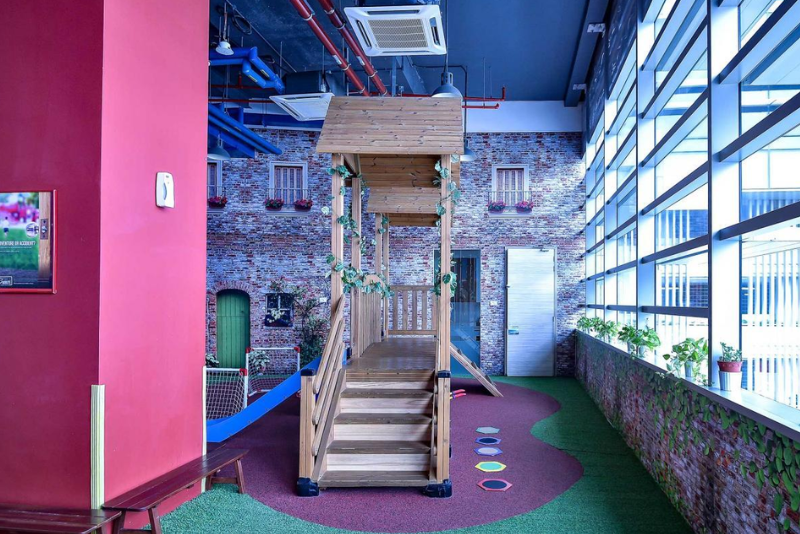
Learning Vision, under the Busy Bees umbrella, has been around for decades and places many of its centres inside workplaces and hospitals. It runs several Partner Operator centres with capped fees. These mid-tier centres are a sensible middle ground when anchor availability is tight, but you don’t have thousands of dollars to throw at international schools.
Premium local chains
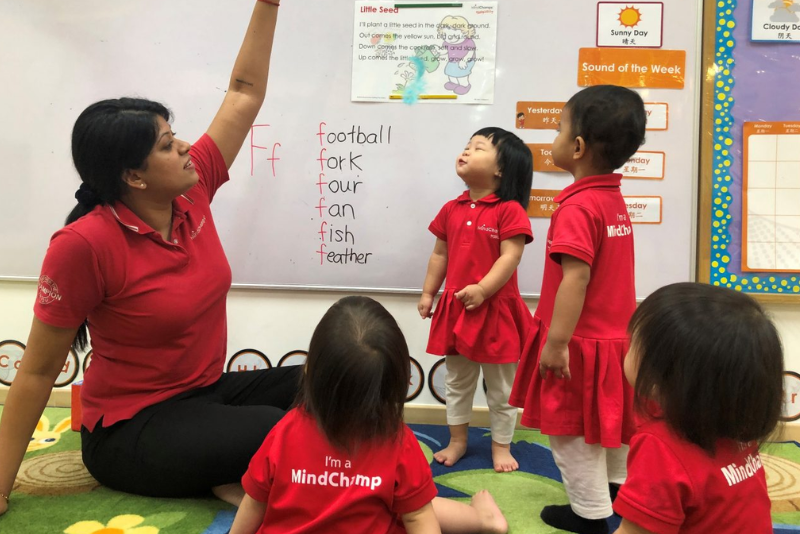
Everybody knows Mindchamps, with its structured, fairly academic approach and large footprint. Similarly, Chiltern House, founded by the late educator Julia Gabriel, is known for strong language and literacy work, speech and drama, and small classes. Finally, Pat's Schoolhouse helped pioneer bilingual immersion in Singapore, running English and Mandarin together in the same classroom.
Montessori, Reggio, and international

Brighton Montessori offers a hands-on Montessori programme across several centres. EtonHouse runs Reggio-inspired preschools alongside its international schools, with bilingual options and premium fees. For families on an international track, Stamford American's Earlyz Learning Village near Woodleigh is a large, facilities-rich campus running an IB and American framework (and priced accordingly)
Tl;dr
Start with the Preschool Search, shortlist by what your daily life actually needs, then get on waitlists early. Work out your real fee after subsidies, and always visit before you make your final decision. Choosing a preschool is a big call, but you don't have to get it "perfect." You just have to find the right fit for your child and your family. And once the big admin is handled, there's the fun part of family life to look forward to.
(Feature photo from: PCF Sparkletots)
Related articles
- The best stores for second-hand watches in Singapore, from vintage Seikos to pre-owned Rolex
- Your guide to Singapore petrol prices right now: SPC, ESSO, RON, and more
- 5 unique fish farms in Singapore for your next weekend escape
- The top family-friendly activities in Singapore for your next day out
- The hottest promotions and deals in Singapore (July 2026)


